Self-Hypnosis: How to Hypnotise Yourself at Home
Jun 09, 2026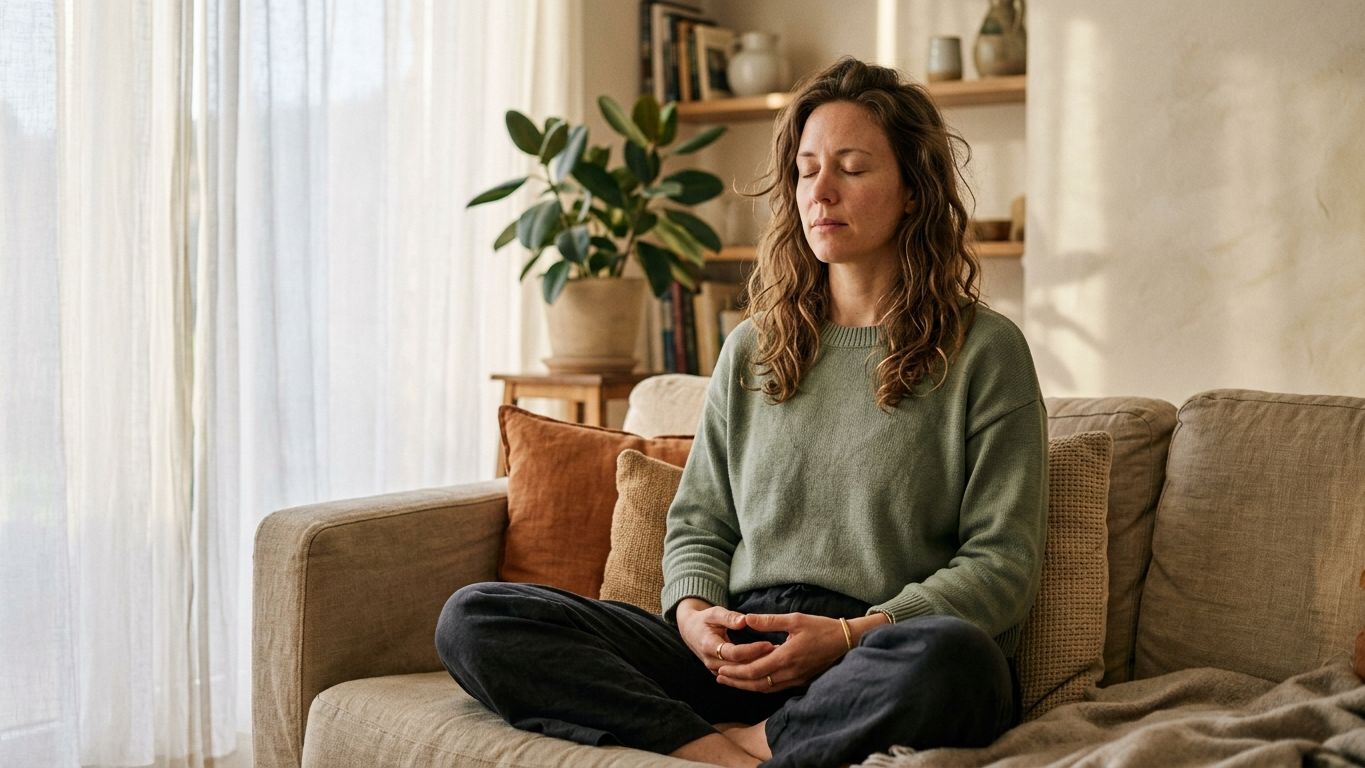
Self-hypnosis is more accessible than most people think. You don't need special equipment, years of training, or even a particularly quiet house. What you do need is a basic understanding of how it works, a clear intention, and a little practice.
Whether you're curious about hypnosis for the first time or you've already explored what hypnotherapy can do, this guide walks you through exactly how to hypnotise yourself – step by step.
Quick Answers:
- Self-hypnosis is the practice of guiding yourself into a focused, relaxed state to deliver positive suggestions to your subconscious mind
- It uses the same principles as a clinical hypnotherapy session, just without the therapist
- Common uses include reducing anxiety, improving sleep, building confidence, and changing habits
- Most people can learn to do it effectively with a little practice
- It's a complement to professional hypnotherapy, not a replacement for it
What is Self-Hypnosis?
Self-hypnosis is a self-directed process where you guide your own mind into a deeply relaxed, focused state, and then use that state to introduce positive change.
If you've ever driven somewhere familiar and arrived without really "remembering" the journey, or become so absorbed in a book that you lost track of time, you've already experienced something close to a hypnotic state. Self-hypnosis works by entering that naturally occurring state intentionally.
It's worth clearing up a common misconception: hypnosis isn't sleep, and it isn't a loss of control. You remain aware throughout. The difference is that your analytical, critical mind relaxes enough to let new ideas in – making the subconscious more receptive to suggestion.
For a broader look, our article on what hypnotherapy is is a good starting point.
What Can Self-Hypnosis Be Used For?
Self-hypnosis techniques are used for a wide range of personal goals, including:
- Reducing anxiety and stress: Calming an overactive nervous system and quieting worried thinking.
- Improving sleep: Releasing mental tension that makes it hard to switch off at night.
- Building confidence: Reinforcing self-belief at the subconscious level.
- Breaking habits: Changing automatic responses like nail-biting, emotional eating, or negative self-talk.
- Improving focus and performance: Used by athletes, public speakers, and professionals for mental preparation.
- Managing pain: Under appropriate guidance, hypnosis has a well-established role in pain management.
If anxiety is something you're specifically working on, it's also worth reading about hypnotherapy for anxiety and what a professional session can offer alongside your own practice.
How to Hypnotise Yourself: Step by Step
Here's a straightforward self-hypnosis technique you can try at home. It draws on the same core principles used in clinical hypnotherapy – induction, deepening, suggestion, and emergence.
Set aside 15–20 minutes. Find somewhere comfortable where you won't be interrupted.
Step 1: Set Your Intention
Before you begin, decide what you want from this session. Keep it simple and specific.
"I want to feel calm" is more useful than a vague wish to "feel better."
Write it down if that helps, or just hold it clearly in your mind. Frame your intention as a positive statement – what you want to feel, not what you want to avoid.
"I feel calm and focused" rather than "I don't want to feel anxious."
Step 2: Get Comfortable and Settle In
Sit in a comfortable chair or lie down. Loosen anything tight – shoes, a belt, your collar. Close your eyes.
Take three slow, deep breaths. With each exhale, let your body soften a little more. There's nothing you need to do right now except be here.
Step 3: Relax Your Body Progressively
Starting at the top of your head, slowly scan down through your body – your scalp, forehead, jaw, neck, shoulders, arms, chest, belly, hips, legs, feet. As you reach each area, invite it to release any tension.
You don't need to force this. Just notice each part and let it soften. By the time you reach your feet, most people feel noticeably heavier and more settled.
Step 4: Deepen the State
This is where you move from relaxed to hypnotic. Use one of these deepening methods:
- Countdown: Slowly count down from 10 to 1, telling yourself that with each number you go deeper into relaxation. "10… deeper and more relaxed… 9… calm and at ease… 8…"
- Staircase visualisation: Picture yourself at the top of a beautiful staircase with 10 steps. Each step you descend takes you into a more peaceful, focused state. Feel the texture of the banister, the softness underfoot.
- Favourite place: Imagine a place where you feel completely safe and at ease – a beach, a garden, a room you love. Build the details: what you can see, hear, and smell. Let yourself be there fully.
By the end of this step, you should feel deeply relaxed and inwardly focused. This is the hypnotic state.
Step 5: Deliver Your Suggestions
Now introduce the positive suggestions you prepared in Step 1. Speak them slowly and clearly in your mind, in the present tense, as though they're already true.
For example:
- "I am calm and relaxed in situations that used to stress me."
- "I sleep easily and wake feeling rested."
- "I trust myself. I am confident and capable."
Repeat each suggestion several times. You can also visualise yourself experiencing the outcome – see yourself handling a difficult situation with ease, or falling into restful sleep.
Keep this part simple. Two or three clear suggestions are more effective than a long list.
Step 6: Emerge Gently
When you're ready, bring yourself back to full awareness slowly. Count up from 1 to 5, telling yourself that with each number you become more alert, refreshed, and present.
"1… starting to return… 2… becoming more aware… 3… feeling refreshed… 4… almost back… 5… eyes open, fully awake and feeling good."
Take a moment before you get up. Notice how you feel.
Tips for Getting the Most Out of Self-Hypnosis
- Consistency matters more than duration: Ten minutes daily will produce better results over time than an occasional hour-long session.
- Don't judge the first few attempts: The hypnotic state can feel subtle – some people expect something dramatic and think it "didn't work." If you felt relaxed and focused, it worked.
- Use the same routine each time: Your brain responds to familiar cues. Using the same chair, the same deepening technique, and the same suggestions, each session trains your mind to enter the state more quickly.
- Record your suggestions: Some people find it easier to play a recording of their own voice rather than narrating silently. There are also guided self-hypnosis recordings available if you'd prefer a starting point.
- Work on one thing at a time: Self-hypnosis for anxiety, sleep, or confidence – each is valid. But focusing on a single goal per practice session gives your subconscious a clear target.
Self-Hypnosis vs. Working with a Hypnotherapist
Self-hypnosis is a useful practice. But it has limits.
A trained clinical hypnotherapist brings skills that go well beyond guided relaxation. They can identify subconscious blocks, work with complex emotional material, adapt techniques in real time to what a client needs, and draw on a range of advanced approaches developed through structured training and supervised practice.
Think of self-hypnosis the way you might think of home exercise versus working with a personal trainer. Both are valuable. But for bigger change, professional hypnotherapy tends to achieve far more, far faster.
Curious About How to Hypnotise Yourself More Effectively – or Others?
For many people, learning self-hypnosis is the beginning of a much bigger interest.
If you find yourself drawn to how this all works – not just as a personal practice, but as something you could use to genuinely help people – that curiosity is worth following.
At the Australian Academy of Hypnosis, our hypnotherapy course for beginners teaches the clinical foundations of hypnosis in person, with real supervised practice from day one. It's nationally recognised, accredited, and designed to prepare you for actual client work – not just theory.
Thousands of Australians have discovered a meaningful career through hypnotherapy. If you'd like to know more about what that path looks like, our guide to becoming a hypnotherapist is a great place to start. Or feel free to contact the Australian Academy of Hypnosis directly – we're happy to answer your questions.
Frequently Asked Questions
Can anyone learn self-hypnosis?
Most people can, yes. Hypnotic suggestibility varies from person to person, but the capacity to enter a relaxed, focused state is something almost everyone has access to with practice.
How long does it take to see results?
Some people notice a shift after a single session. For most goals, consistent practice over two to four weeks is when real change starts to become noticeable.
Is self-hypnosis safe?
Yes, when practised sensibly. It's a deeply relaxed, natural state – not a medical procedure. If you're managing a serious mental health condition, it's worth talking to your GP or mental health professional about whether self-hypnosis is appropriate alongside your current treatment.
Can I get "stuck" in hypnosis?
No. You can bring yourself out of a self-hypnosis session at any time, simply by deciding to. The same is true in clinical hypnotherapy – you're always in control.
What's the difference between self-hypnosis and meditation?
Both involve focused attention and relaxation. The key difference is that self-hypnosis has a specific goal and includes directed suggestions, so you're actively using the relaxed state to create change. Meditation tends to focus more on awareness itself.
Disclaimer: Self-hypnosis is a complementary practice and is not a substitute for professional mental health care. If you are experiencing significant anxiety, depression, or other mental health concerns, please speak with a qualified health professional.