Hypnotherapy for Gambling Addiction: How It Works and What to Expect
Sep 24, 2026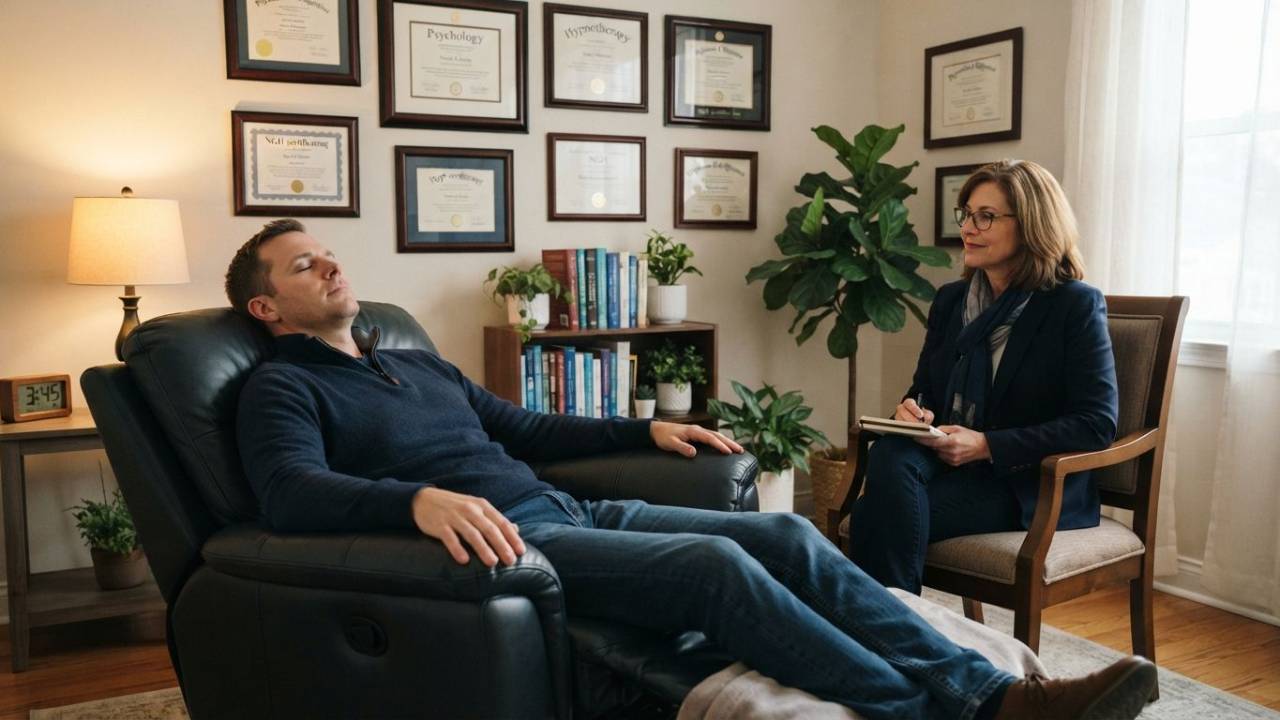
Australians lose more to gambling than any other nation on earth. In 2022–23, national gambling losses reached $31.5 billion, around $1,527 for every adult, the highest figure in two decades. Behind those numbers sit real people: partners hiding bank statements, someone chasing losses on a phone at 2am, careers and homes quietly coming apart.
Hypnotherapy for addiction is one of several approaches people turn to when willpower and good intentions haven't been enough. It isn't a magic cure, but for gambling in particular, working at the subconscious level makes sense, because that's where the behaviour is anchored.
Hypnotherapy for gambling addiction is a therapeutic approach that uses guided relaxation and focused attention to help a person identify and reframe the subconscious patterns, triggers, and emotional needs that drive compulsive gambling behaviour.
This article covers why gambling is so hard to stop, how hypnotherapy works with it, what a course of treatment looks like, what the research does and doesn't show, and how practitioners train to deliver it.
Key Insights
- Hypnotherapy for gambling addiction works at the subconscious level, reframing the triggers, cravings and emotional needs behind the behaviour.
- A typical course runs six to ten sessions: intake and history first, then induction, reframing and relapse-prevention work.
- The evidence is mixed. Results are strongest when hypnotherapy is combined with CBT, counselling and support groups rather than used on its own.
- Because the field is self-regulated in Australia, check a practitioner's peak-body registration (AHA, ASCH or PHA) and qualifications before booking.
- Struggling right now? Gambling Help Online (1800 858 858) and Lifeline (13 11 14) are available 24/7.
Why a Gambling Addiction is So Difficult to Overcome
Gambling addiction is a behavioural addiction. There's no substance in the bloodstream, yet the pull can be every bit as strong as a chemical dependency, and the reason lives in the brain's reward system.
Every bet triggers a hit of dopamine. Poker machines and betting apps are engineered around the "near miss" (two matching symbols and a third just above the line), which the brain reads as almost winning and rewards accordingly. That near miss keeps a person playing long after the money stops.
This is why willpower alone rarely holds. Someone can decide, sincerely, to stop, and still find themselves logging back in that night. The decision is made by the conscious mind, but the behaviour is driven from underneath it, wired to stress, boredom, loneliness, escape, or the pressure of the losses already sitting on the credit card.
Gambling is also uniquely hard compared with substance addictions. There's nothing physical to remove from the house. It's socially normalised, woven through sport and advertising. And it's available every hour, every day, through a phone in your pocket. Removing the substance isn't an option, so the work has to happen at the level of the pattern itself.
How Hypnotherapy for Gambling Addiction Works
Rather than fighting the conscious "I should stop" battle a person has usually already lost many times, hypnotherapy works with the subconscious drivers underneath the habit. Here's what that involves in practice.
Accessing the Subconscious Mind
The hypnotic state is nothing mystical. It's a state of focused attention and heightened suggestibility, similar to being absorbed in a film or a long drive, in which the usual critical filter softens, and new ideas land more readily. The client stays fully aware and in control the entire time.
Identifying the Underlying Drivers
A skilled hypnotherapist helps the client uncover what the gambling is really doing for them. It's rarely about the money. More often, the behaviour is soothing anxiety, filling a void, numbing a difficult feeling, or providing the only reliable escape in an otherwise stressful week. Naming that need is the start of meeting it another way.
Reframing Triggers and Cravings
Techniques such as aversion suggestion, ego strengthening, and future pacing help the subconscious form new associations. Instead of a trigger leading straight to the reward loop, the client is guided to connect gambling with its real consequences and to picture a version of their life aligned with what matters most to them: their family, their financial security, and their self-respect.
Building New Coping Resources
Breaking a pattern leaves a gap. Hypnotherapy installs alternative responses so the client has something to reach for when a trigger hits, rather than the machine or the app. This is the difference between white-knuckle abstinence and lasting change.
A qualified practitioner will often blend modalities to do this work. Ericksonian hypnosis with its indirect, metaphor-based approach, cognitive behavioural hypnotherapy (CBH), parts therapy, and ego-state work. The right mix depends on the person in the chair.
What to Expect in a Hypnotherapy Session for Gambling Addiction
Knowing the shape of treatment takes the mystery out of it. A typical course follows a clear arc.
- Session 1: Intake and History: The practitioner explores gambling patterns, triggers, and the financial and relationship impact, and screens for co-occurring issues such as anxiety or depression. This session sets goals and builds trust before any deeper work begins.
- Sessions 2–3: Induction and Exploration. The client learns to enter the hypnotic state comfortably, and the therapist begins mapping the subconscious associations behind the behaviour.
- Sessions 4–6: Reframing and Resource Work. This is the core of treatment: reframing triggers, aversion techniques where appropriate, and installing new coping responses.
- Follow-up: Reinforcement and Relapse Prevention. Later sessions consolidate the change and prepare the client for high-risk moments.
Most people can expect a course of roughly six to ten sessions. A responsible practitioner will also know the limits of their scope. Most will not take on someone in acute financial crisis, or with untreated co-occurring mental health conditions, without referring them to appropriate support first.
What the Research Says About Hypnotherapy for Addiction
The most-cited study is Potter's 2004 case series in the American Journal of Clinical Hypnosis, which followed 18 people over seven years through intensive daily hypnosis and reported a 77% success rate at one-year follow-up.
Where the evidence is broadest, in smoking cessation, the picture is more sobering. The 2019 Cochrane review found insufficient evidence that hypnotherapy outperforms other behavioural support or unassisted quitting on its own. Tellingly, though, when hypnotherapy was used as an adjunct to other treatment, pooled data from five trials pointed to a benefit.
How strong is the evidence for hypnotherapy for addictions?
For behavioural addictions like gambling specifically, the research base is thinner still, and most of what we know is extrapolated from smoking and alcohol studies. Hypnotherapy for addictions shows its strongest results when integrated with other approaches such as CBT and support groups, rather than used as a standalone treatment.
What is the success rate of hypnotherapy for addiction?
There's no single reliable figure, and anyone quoting one should be treated with caution. Small studies report rates as high as 77%, but those are uncontrolled and hard to generalise. Realistically, outcomes vary widely and depend on how well hypnotherapy is combined with other support, the person's engagement, and whether co-occurring conditions are being treated. It's a useful tool within a plan, not a guaranteed outcome.
Where Hypnotherapy for Addiction Fits Alongside Other Treatments
Positioned correctly, hypnotherapy is one part of a broader recovery approach, and the most effective plans usually combine several.
- Gambling Help Online offers free, confidential counselling 24/7 on 1800 858 858.
- Gamblers Anonymous provides peer support through a structured, community-based program.
- Financial counselling addresses the debt and money stress that often fuel the cycle; many gambling counsellors offer this directly.
- CBT with a registered psychologist targets the thinking patterns behind compulsive behaviour.
- Medication may be appropriate for co-occurring conditions such as depression or anxiety, managed by a GP or psychiatrist.
A good hypnotherapist sees these as teammates, not competitors, and refers on when a client needs more than hypnotherapy can offer.
How to Find a Qualified Hypnotherapist for Gambling Addiction
Because hypnotherapy is currently self-regulated in Australia, checking qualifications and peak-body registration matters more here than in many other health fields. When choosing a practitioner, look for:
- Registration with a recognised peak body, such as the Australian Hypnotherapists Association (AHA), the Australian Society of Clinical Hypnotherapists (ASCH), or the Professional Hypnotherapists of Australia (PHA).
- A Diploma of Clinical Hypnotherapy or Advanced Diploma as a minimum qualification.
- Additional training in addictions or behavioural change, not just general practice.
- A willingness to work as part of a broader treatment team.
The strongest evidence for hypnotherapy for addictions comes from practitioners who work within their scope and alongside other professionals.
Becoming a Hypnotherapist Who Helps People with Gambling Addiction
Demand for skilled hypnotherapists trained in addiction work is growing as Australia contends with rising rates of problem gambling, particularly among younger adults. Betting has climbed sharply among men aged 18 to 34, with the share of men placing a bet in a typical month jumping from around 10–11% to 17% between 2015 and 2022, driven largely by online sports betting apps. For therapists, counsellors, and career-changers drawn to this work, formal training is the pathway to practising ethically and effectively.
The route is a staged one. Foundation training at the certificate level covers induction techniques and the therapeutic frame. Diploma-level study builds the clinical skill base needed to work with complex presentations, such as addictions. An advanced hypnotherapy course or specialised addictions module develops the depth to work with gambling specifically, where reframing subconscious patterns takes real skill.
The Australian Academy of Hypnosis trains people to deliver this kind of work. If becoming one of them appeals to you, that's where to begin your training.
And if you're reading this because gambling has its grip on you or someone you love, support is available right now: Gambling Help Online on 1800 858 858, or Lifeline on 13 11 14.
Behind every trained hypnotherapist is a decision to help people change their lives. Gambling addiction is difficult, but it's one of the areas where skilled therapeutic work can make a real difference.