Hypnotherapy for Fear of Flying: Step-by-Step Process and Success Rates
Sep 24, 2026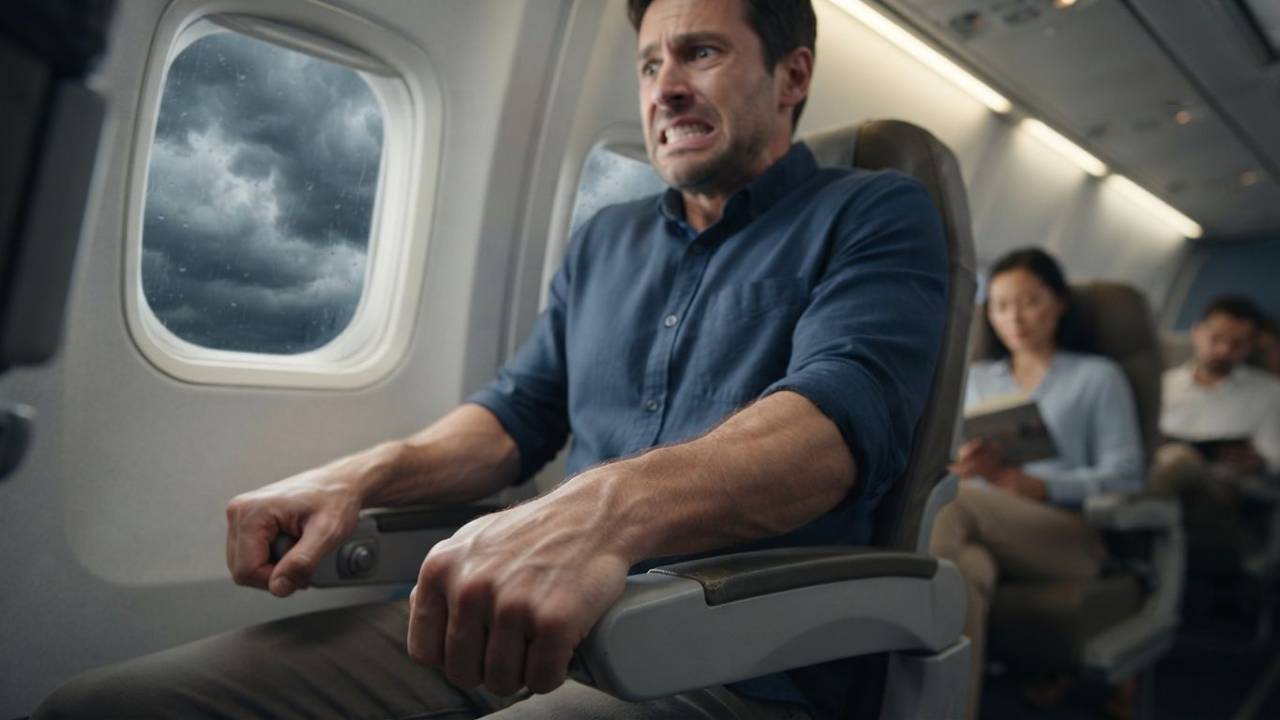
You book the flight, and straight away your stomach drops. Not from excitement, but from dread. Maybe it's the nights before the trip when sleep won't come, or the white-knuckle grip on the armrest the second the seatbelt sign goes on. About one in six people have a fear of flying significant enough to stop them from boarding a plane, and plenty more grit their teeth through every takeoff.
Hypnotherapy for fear of flying is a targeted therapeutic approach that uses guided relaxation, subconscious reprogramming, and mental rehearsal to interrupt the anxiety response associated with air travel, typically over 2 to 4 sessions with a qualified practitioner.
Here's what the process looks like session by session, what the research says about how well it works, and a few self-hypnosis techniques you can start using before your next flight.
Quick Answer
- Hypnotherapy for fear of flying typically runs 2–4 sessions, working through assessment, root-pattern work, desensitisation rehearsal, and anchoring for the actual flight.
- It targets the automatic subconscious fear response directly, rather than trying to reason you out of it.
- The strongest evidence for hypnosis in anxiety treatment comes from studies combining it with CBT (cognitive-behavioural hypnotherapy), not from hypnosis used alone.
- Self-hypnosis techniques can help before a booked flight, but aren't a substitute for professional treatment if the fear is severe.
Understanding Fear of Flying
Fear of flying (sometimes called aviophobia) sits under "specific phobia, situational type" in the DSM-5-TR, the diagnostic manual clinicians use. Research summarised by the American Psychological Association puts the number of people who report some fear of flying as high as 40%, though a smaller share meet the full clinical criteria for a phobia.
It isn't a weakness, and it isn't irrational in the way it feels to the person living with it. This is precisely why hypnotherapy for fear of flying tends to work well as a starting point, because it targets the automatic response itself, not the logic around it. Your brain's threat-detection system has learned to treat flying as danger, and that response fires automatically, long before conscious thought gets a say.
The specific trigger differs from person to person. For some, it's turbulence. For others, it's the enclosed space, the total loss of control, a fear of panicking in front of strangers, or a single bad flight that the mind never quite let go of. A specific phobia only becomes a clinical concern when it causes real distress or starts limiting someone's life.
Specific phobias, including fear of flying, respond well to targeted treatment. Because the fear is largely driven by automatic subconscious patterns, it tends to respond particularly well to therapies designed to work directly with the subconscious. That's a large part of why hypnotherapy for fear of flying treatment has such a solid track record, and it's worth reading how hypnotherapy works if you want the mechanics behind it, alongside our broader piece on hypnotherapy for phobias.
The Step-by-Step Hypnotherapy Process for Fear of Flying
Fear-of-flying hypnotherapy isn't a single session where you're told to "relax and let go." It's a structured process, usually spread across a handful of sessions, each building on the last. Here's how a typical course of hypnotherapy for fear of flying unfolds.
Session 1: Assessment and History
The first session is mostly conversation. The practitioner asks when the fear started, whether it followed a specific incident, and which part of flying triggers it most. If there's a flight already booked, that becomes the reference point for everything that follows. Many practitioners introduce basic relaxation and a first induction near the end of this session, so the client gets a feel for the hypnotic state before any deeper work begins.
Session 2: Addressing the Root Pattern
For many clients, fear of flying traces back to a specific memory. For others, it's part of a broader pattern around control or generalised anxiety. This session uses techniques such as age regression, resource installation, and reframing to address the pattern at its source, rather than just managing surface-level symptoms.
Session 3: Systematic Desensitisation and Rehearsal
Here, the client is guided through the entire flying experience in a relaxed, hypnotic state. This is a form of imaginal exposure, and it works by gradually rewiring the association between flying and threat, one calm rehearsal at a time.
Session 4: Anchoring and Future Pacing
A physical anchor (a specific breath, a touch, a word) gets installed and linked to a calm, capable state the client can trigger during the real flight. If there's a specific trip coming up, the practitioner future-paces the actual experience: the flight number, the destination, and how it will feel to land calmly.
Post-Flight Follow-Up (Optional)
Some practitioners offer a short follow-up session after the client's flight to reinforce what worked and address any unexpected issues that arose in the air.
Most clients complete this process in 2 to 4 sessions. More complex presentations sometimes take up to 6.
What the Research Says About Hypnotherapy for Fear of Flying
Fear of flying, as a specific phobia, has well-established evidence behind treatments like cognitive behavioural therapy with exposure, and increasingly, virtual reality exposure therapy.
The strongest evidence for hypnosis in anxiety treatment comes from studies looking at it as an addition to CBT, rather than as a stand-alone approach. A widely cited meta-analysis on hypnosis combined with cognitive-behavioural therapy found that the average client receiving cognitive-behavioural hypnotherapy showed greater improvement than 70–90% of clients receiving the same therapy without hypnosis.
Studies focused specifically on hypnotherapy for aviophobia are limited in number, which is worth saying plainly rather than glossing over. Much of the direct clinical evidence for fear-of-flying treatment centres on exposure-based and cognitive approaches. What the broader phobia and anxiety literature does show consistently is that hypnosis strengthens outcomes when it's layered onto an established cognitive-behavioural framework, rather than used in isolation.
Practitioners who regularly work with fear-of-flying hypnotherapy report high rates of improvement among clients who complete the process. Ultimately, hypnotherapy for fear of flying (especially when it incorporates cognitive-behavioural elements) has solid clinical backing and a supportive research base. It's also one of the more treatable presentations a hypnotherapist works with, largely because the trigger is specific, time-limited, and clearly defined.
Self-Hypnosis Techniques for Your Next Flight
If you've got a flight coming up before you can book in with a practitioner, these three techniques give you something concrete to work with in the meantime.
The Pre-Flight Calm-State Rehearsal
Set aside 5–7 minutes the night before you fly, and again in the morning. Settle somewhere quiet, slow your breathing, and mentally walk through the entire flight while staying deliberately relaxed at each stage. Picture yourself calm at your destination. Repeat the specific reason for the trip as an anchor for why it's worth doing.
The Airport-to-Boarding Anchor
Pick a truly calm memory, somewhere you felt completely safe and steady. Link that memory to a simple physical cue, like touching your thumb and index finger together. Practise the pairing for a week or two before you fly, so the anchor is well established by the time you need it. Use it at boarding, at takeoff, during any turbulence, and the moment you notice the fear response starting to build.
The In-Flight Breath-and-Body Scan
This one works discreetly, mid-flight. Breathe in for a count of four, out for a count of six to eight. The longer exhale is what signals safety to your nervous system. While you do it, run a slow mental scan from your feet to your head, noticing where you're holding tension and consciously softening it as you go.
These techniques support the anxiety response, but they aren't a substitute for professional treatment where the fear is severe or trauma-linked. If it's significantly affecting your life or your ability to travel for work, a qualified hypnotherapist or psychologist can work through it with you properly.
If flying anxiety sits alongside broader anxiety symptoms, it's worth reading our piece on hypnotherapy for anxiety, too. If you'd rather build these skills into a regular practice first, our guide to self-hypnosis at home walks through the fundamentals.
How Hypnotherapy Compares to Other Treatments for Fear of Flying
There's no single best approach for every person, and the strongest results often come from combining more than one.
- Cognitive behavioural therapy (CBT) with exposure: the gold-standard, most extensively researched treatment for specific phobias.
- Virtual reality exposure therapy (VRET): increasingly accessible, well supported by evidence, and useful for people who can't easily book real flights to practise on.
- Fear-of-flying courses: some airlines have historically run structured programs combining aviation education with graded exposure and relaxation training.
- Short-term anxiolytic medication: a GP-prescribed option for a specific upcoming flight; effective for acute anxiety, but it doesn't address the underlying pattern.
- Hypnotherapy, particularly cognitive-behavioural hypnotherapy: works at the subconscious level, often produces noticeable change faster than CBT alone, and typically runs 2–4 sessions.
For a lot of people, the best results come from stacking these: hypnotherapy to shift the subconscious pattern, a structured course or exposure work for education and practice, and self-hypnosis techniques as the tool you reach for on the day. Many experienced practitioners recommend exactly this kind of combined approach rather than picking just one.
What to Look for in a Hypnotherapist for Fear of Flying
Not every practitioner offering hypnotherapy for fear of flying has the same level of training, so it's worth checking a few things before you book in.
- Registered with a recognised peak body, such as the AHA, ASCH, or PHA
- Holds a Diploma of Clinical Hypnotherapy or equivalent, at minimum
- Has specific experience with phobias
- Willing to structure sessions around a real flight deadline, if you have one
- Sessions typically run 60–90 minutes, across a course of 2–4 visits
- Costs generally fall between $150 and $250 per session in Australia
- Some offer intensive short-course work timed to an upcoming trip
Hypnotherapy is a self-regulated profession in Australia, which makes peak-body registration one of the clearest signals of a properly trained practitioner. It's currently not directly Medicare-rebatable, though some private health funds offer partial rebates depending on your level of cover.
Training to Help Others Overcome Fear of Flying
Specific phobia work is one of the most rewarding specialisations a hypnotherapist can take on. The trigger is clear, the intervention is time-bounded, and the outcomes can be life-changing: a client who couldn't make it to an overseas wedding, or turned down a role because it required travel, back in the air within weeks. It's also work that tends to generate strong word-of-mouth referrals, because the transformation is so visible to family and friends.
The training pathway builds in stages:
- A hypnotherapy course at certificate level establishes the core techniques
- A diploma of clinical hypnotherapy builds the assessment skills, the cognitive-behavioural framework, and the clinical judgement needed to work responsibly with phobias
- An advanced hypnotherapy course develops deeper expertise in specific phobia work and trauma-informed practice, and introduces what Ericksonian hypnosis brings to that toolkit
Getting Back in the Air
Fear of flying is one of the most treatable fears a person can face. People who've carried a lifelong dread of flying regularly go through this process and come out the other side looking forward to travel, not just tolerating it. Whether that starts with the self-hypnosis techniques above ahead of your next flight, or a proper course of sessions with a qualified practitioner, the tools to get there already exist.
And if this is the kind of work that pulls at you from the other side of the room, that training pathway is there when you're ready for it. The Australian Academy of Hypnosis focuses on phobia and anxiety-related work like this, so it's worth a proper look if specific phobia treatment is where your interest lies.